
International
🌍 Public
🥜 Allergy aware
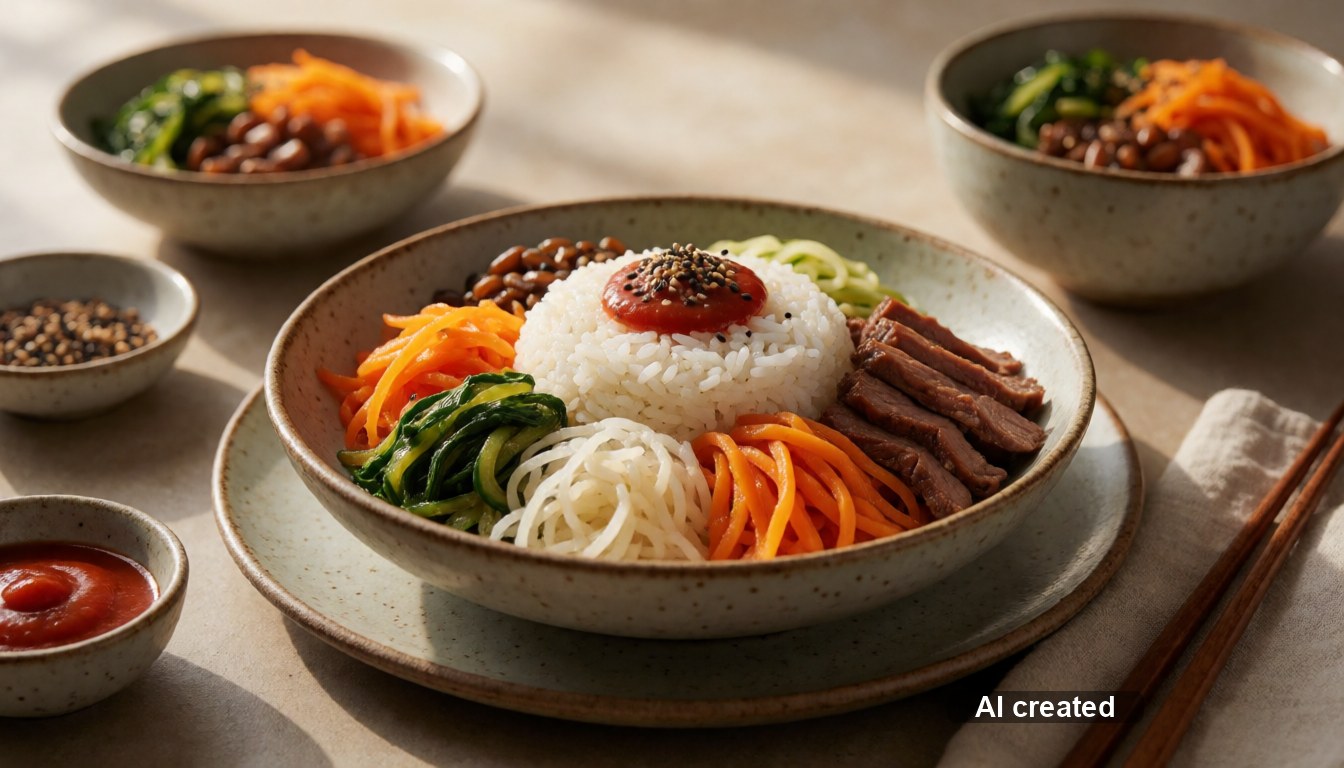
Bibimbap (Korean Rice Bowl)
Korea's most popular rice dish: a warm rice bowl with colorful vegetables, meat or vegetarian, egg and gochujang sauce — mix everything together before eating.
🥜 Allergies considered in this recipe:
🥚 Egg🫘 Soy🫓 Sesame
Source / link: Koreanische Küche (Reis-Klassiker)
Ingredients
Amounts adjust automatically.
| 300 g | Rice (sushi rice or pudding rice) |
| 200 g | Beef (or mushrooms/tofu) |
| 200 g | Spinach |
| 2 Stück | Carrots |
| 1 Stück | Zucchini |
| 150 g | Bean sprouts |
| 4 Stück | Eggs |
| 3 EL | Gochujang (Korean chili paste) |
| 2 EL | Soy sauce |
| 2 EL | Sesame oil |
| 2 Zehen | Garlic |
| 1 EL | Sesame seeds (for sprinkling) |

Preparation
- 1 Cook the rice according to the package instructions and keep it warm.
- 2 Cut the meat into thin strips, marinate with soy sauce, garlic and a little sesame oil, and sear vigorously in a pan.
- 3 Cut the carrots and zucchini into thin strips and briefly sauté each separately in the pan; briefly blanch the spinach and bean sprouts and season with sesame oil and salt.
- 4 Fry the eggs as sunny-side-up eggs (classically with a runny yolk).
- 5 Divide the rice among bowls and arrange the meat and vegetables on top, sorted by color.
- 6 Place one egg on each bowl, sprinkle with gochujang and sesame seeds, and mix everything together well at the table.
Notes & tips
Note: Contains egg, soy and sesame. Classically, the rice is served in the bowl and mixed at the table. Vegetarian version: replace the meat with fried mushrooms or tofu.
Nutrition
estimated per serving- Calories
- 602 kcal
- Protein
- 28 g
- Fat
- 23 g
- Carbs
- 69 g
– = ingredient not in nutrition database (estimate incomplete)